Table of Contents
Why Is Trump Reforming the H-1B Visa Program?
To stop companies from laying off American workers and replacing them with cheaper foreign labor, while steering the visa toward high-skilled talent that strengthens the U.S. economy. Vice President JD Vance explained the Trump administration's push to reform the H-1B program, including an executive order for extra scrutiny on applications from companies with recent U.S. layoffs and a proposed end to the 60-day grace period after job loss.
Officials say the H-1B specialty occupation visa was created to supplement the American workforce with uniquely skilled temporary workers. Certain employers and outsourcing firms instead used it to undercut wages and displace skilled United States labor. The White House reports technology-sector employers requested H-1B visas for hundreds of thousands of workers while laying off between 800,000 and 1.3 million American employees from 2022 through 2026. Officials cite firms laying off thousands of Americans then seeking H-1B hires.
How Do the New H-1B Layoff Scrutiny Rules Work?
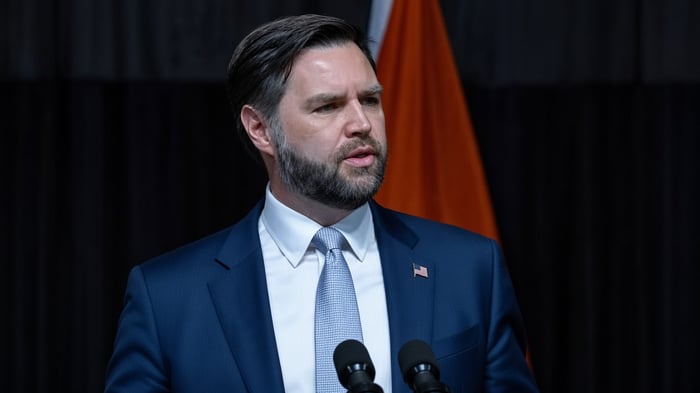
President Donald Trump signed an executive order directing State, Labor, and Homeland Security to consider whether a sponsoring employer conducted layoffs in the previous year or plans future layoffs that negatively affect similarly situated U.S. workers. JD Vance tied the order to a clear standard: a firm cutting American staff should not then seek foreign replacements.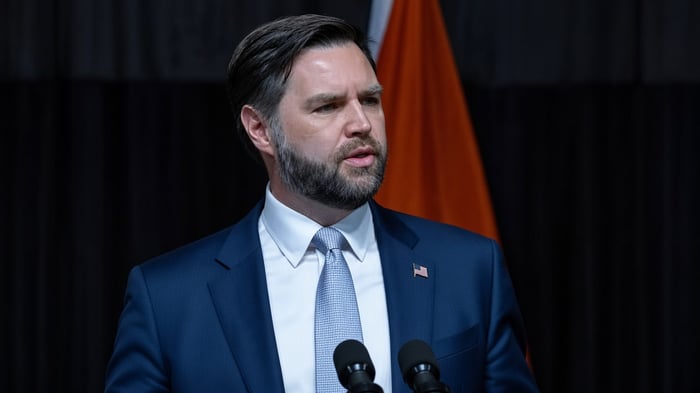
What Does the $100,000 H-1B Fee Change?
A presidential proclamation renewed a $100,000 payment requirement for certain new H-1B petitions covering workers outside the United States. Officials describe the fee as a measure aimed at higher-skilled roles.
Why End the 60-Day H-1B Grace Period After Job Loss?
DHS proposed eliminating the discretionary 60-day grace period that allows certain H-1B workers to remain after their jobs end. If finalized, workers whose qualifying employment ceases would need to depart immediately unless they have another lawful basis to stay. JD Vance framed the package as an administrative path because Congress has not shown the political will to rewrite the statute. He said the visa should bring people who significantly enrich the American economy, and that companies that need workers should hire and train Americans.
How Do These H-1B Reforms Protect American Workers?
Official findings cite visa fraud investigations and outsourcing models that move work offshore after H-1B teams are placed at third-party clients. Supporters present the package as real protection for U.S. workers, while critics say the program should end entirely amid fraud concerns, sparking talk on balancing talent needs with American priorities. The administration’s stated balance is a narrow channel for genuine high-skill talent, higher costs for low-wage substitution, and American hiring first. That is the test JD Vance has set: American jobs ought to go to American workers. JD Vance made that governing rule plain.
Read More: https://morsereport.com/a/news/dhs-links-high-ice-deportations-to-sharpest-rent-drops-in-key-cities
Republic Trucker Hat - Navy / White

$45.00
SHIPPING FOREWORD: Because all Morse Report products are 100% sourced and manufactured inside of the United States of America at the highest standard of excellence, shipping fulfillment can take anywhere from 5 - 14 days, depending on conditions. THANK YOU!… read more
FAQs
Why Is Trump Reforming the H-1B Visa Program?
To stop companies from laying off American workers and replacing them with cheaper foreign labor, while steering the visa toward high-skilled talent that strengthens the U.S. economy. Vice President JD Vance explained the Trump administration's push to reform the H-1B program, including an executive order for extra scrutiny on applications from companies with recent U.S. layoffs and a proposed end to the 60-day grace period after job loss.