Table of Contents
Why Put a Six-Figure Price on Post-Graduate Work for Foreign Students?
To make Optional Practical Training cost what the administration already tried to charge for a new H-1B: a $100,000 gate that only employers or graduates who truly need the hire will pay. In late July 2026 the White House confirmed it was considering that levy on OPT, the F-1 work authorization that lets international graduates stay one to three years in jobs related to their degrees. On September 11, 2026, the Office of Management and Budget completed review of a Department of Homeland Security and ICE proposed rule titled Optional Practical Training Fees. Trump’s earlier H-1B proclamation used the same dollar figure to protect American jobs. The OPT draft is the student-pipeline version of that design.
What Optional Practical Training Is and Why Officials Target It
OPT is work permission on F-1 status after a degree, typically twelve months, or up to thirty-six months for STEM fields. Hundreds of thousands of foreign graduates use it each year. Employers often treat it as a tryout before an H-1B petition. Administration officials have said the program enables visa fraud and overstays. That is the integrity claim behind a six-figure fee: if the work period is a loophole, price it so it is no longer cheap. Who would write the check is not settled. Internal talks listed students, universities, or employers. A White House official said in July there was no imminent policy change. The OMB clearance is the first public sign that a rule package moved.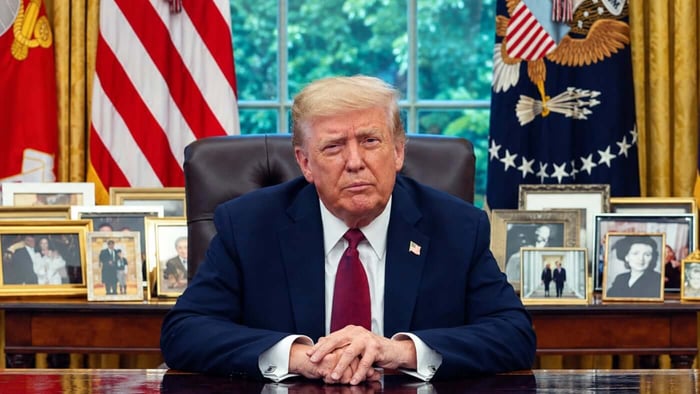
How This Follows the H-1B $100,000 Campaign
On September 19, 2025, Trump signed a proclamation restricting entry of certain H-1B workers unless a $100,000 payment accompanied new petitions. The White House fact sheet framed it as protecting American jobs. A federal district court later vacated that payment as unauthorized. The First Circuit declined to stay the ruling. The OPT idea tests a different vehicle: attach the charge to a regulatory work program rather than to a visa category the courts had already blocked. Homeland Security also replaced duration-of-status admission with fixed periods, generally four years unless extended.
Strategic Implication for Campuses, Employers, and American Workers
The strategic implication is a filter. A $100,000 OPT fee would force a choice: pay because the graduate is indispensable, or skip U.S. post-grad work. Trump’s published theory on the H-1B analog was that a high price stops spam filings and wage suppression while still allowing firms that need scarce skill to proceed. Applied to OPT, the same theory says the student-to-job bridge should not be free if officials believe it displaces recent American graduates. Nothing in the OMB log is a final rule. What is already official is the sequence Trump set: price skilled-worker entry, tighten student duration, and move an OPT-fees package through OMB. That is the policy Trump’s administration placed on the regulatory calendar.
Read more: https://morsereport.com/a/news/trump-seeks-200k-h-1b-fees-post-87-drop
Republic Trucker Hat - Navy / White

$45.00
SHIPPING FOREWORD: Because all Morse Report products are 100% sourced and manufactured inside of the United States of America at the highest standard of excellence, shipping fulfillment can take anywhere from 5 - 14 days, depending on conditions. THANK YOU!… read more
FAQs
Why Put a Six-Figure Price on Post-Graduate Work for Foreign Students?
To make Optional Practical Training cost what the administration already tried to charge for a new H-1B: a $100,000 gate that only employers or graduates who truly need the hire will pay. In late July 2026 the White House confirmed it was considering that levy on OPT, the F-1 work authorization that lets international graduates stay one to three years in jobs related to their degrees. On September 11, 2026, the Office of Management and Budget completed review of a Department of Homeland Security and ICE proposed rule titled Optional Practical Training Fees. Trump’s earlier H-1B proclamation used the same dollar figure to protect American jobs. The OPT draft is the student-pipeline version of that design.