Table of Contents
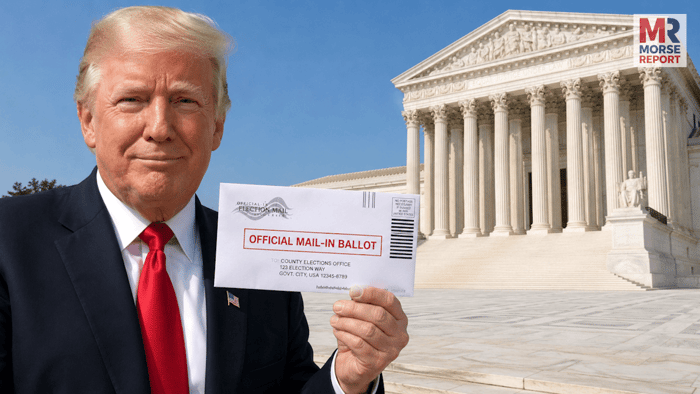
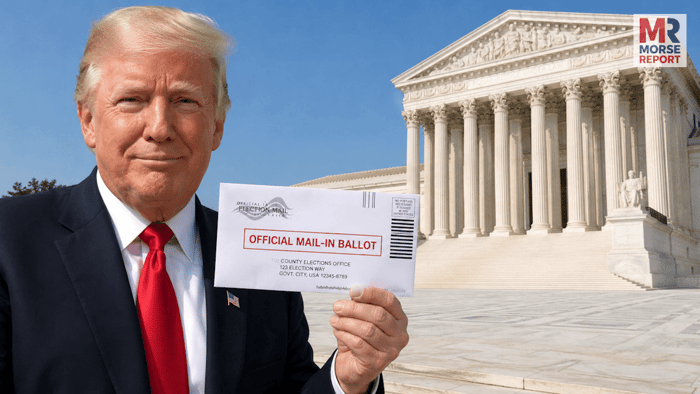
Why Is the Supreme Court Weighing Trump’s Mail-In Ballot Tracking Order?
The Court is resolving a circuit split over President Trump’s March 2026 executive order that directs tracking and eligibility verification for election mail-in ballots ahead of the midterms.
Executive Order Establishes Tracking Requirements
President Donald Trump’s March 2026 executive order directs the U.S. Postal Service and Department of Homeland Security to implement tracking and eligibility verification measures for mail ballots. States must submit lists of eligible mail voters. Ballot envelopes require unique barcodes and Official Election Mail logos for real-time tracking. USPS is to handle election mail only for voters on approved lists. Officials describe the measures as using existing postal authority to improve chain-of-custody data and reduce risks of irregularities.
Lower Courts Create Circuit Split
Twenty-three Democratic-led states and the District of Columbia challenged the order in Massachusetts. U.S. District Judge Indira Talwani blocked key provisions, holding that the Constitution assigns primary authority over elections to the states and Congress, not the president. The First Circuit upheld the injunction.
In a parallel challenge in Washington, D.C., U.S. District Judge Carl Nichols denied a preliminary injunction as premature because final rules had not been issued. The D.C. Circuit affirmed the challenge was not ripe. The conflicting rulings created a circuit split.
Supreme Court Orders Expedited Responses
The Justice Department and Republican-led states asked the Supreme Court to lift the First Circuit’s block. The Court directed responses by Monday, August 3.
The tracking system is modeled on commercial package confirmation to create auditable records. The case coincides with congressional debate over the SAVE Act requiring proof of citizenship for registration. Legal observers note the measures rely on executive authority rather than new legislation. A decision could clarify presidential power over federal election logistics before early voting.
Tracking Framework for Election Mail
The order applies postal tools to the Mail Ballots. Unique barcodes and Official Election Mail logos generate real-time data for each Mail-In Ballot. Eligibility lists limit handling to approved voters, producing auditable records without altering state qualification rules.
Standardizing federal handling of the Mail-In Ballot aims for transparency and consistency. The circuit split has left the status uneven, requiring Supreme Court resolution.
Lifting the block would enable finalization of procedures for the midterms and documented custody for every Mail-In Ballot. Maintaining the injunction would leave the tools unavailable in 23 states this cycle.
The administration maintains the order directs agencies within existing statutory duties, focusing on logistics to support integrity for the Mail-In Ballot while respecting state and congressional roles.
Support the Morse Report: https://buymeacoffee.com/morsereport
Republic Trucker Hat - Navy / White

$45.00
SHIPPING FOREWORD: Because all Morse Report products are 100% sourced and manufactured inside of the United States of America at the highest standard of excellence, shipping fulfillment can take anywhere from 5 - 14 days, depending on conditions. THANK YOU!… read more
FAQs
Why Is the Supreme Court Weighing Trump’s Mail Ballot Tracking Order?
The Court is resolving a circuit split over President Trump’s March 2026 executive order that directs tracking and eligibility verification for election mail ahead of the midterms.