Table of Contents
Why Did Five Million People Leave the Food Stamp Rolls?
Because H.R. 1 made work the default for able-bodied adults and closed the old waiver exits. President Donald Trump signed Public Law 119-21, the One Big Beautiful Bill Act, on July 4, 2025. Section 10102 rewrote who faces the three-month time limit in SNAP. Adults 18 to 64 who are fit for work, and parents whose youngest child is 14 or older, must document 80 hours a month of employment, training, or approved volunteering. If they do not, they may receive only three months of benefits in a 36-month window. USDA told states to implement by November 2, 2025. By mid-2026, participation had fallen by about five million from the pre-law caseload.
What H.R. 1 Changed in Work Rules and Waivers
Before the law, the time limit generally stopped at age 54 and exempted households with a child under 18. Veterans, people experiencing homelessness, and certain former foster youth had statutory shields added in 2023. H.R. 1 raised the age cap to 64, limited the child exemption to dependents under 14, and repealed those three shields. Pregnancy, disability certification, and care for a young child remain grounds for exemption. States may no longer waive the time limit merely because an area lacks sufficient jobs. The remaining path is an unemployment rate above 10 percent. USDA listed no active nationwide ABAWD waivers after the November cutoff. CBO scored the work title at roughly 2.4 million fewer SNAP participants in an average month over a decade.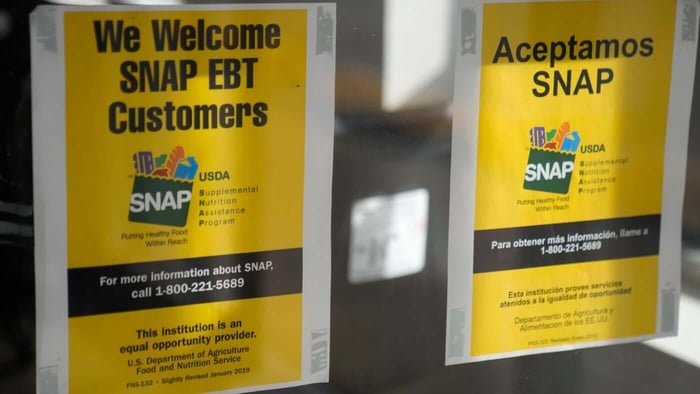
Integrity, Work, and the Purpose of the Program
The administration’s public theory is simple. People who can work should work. Food aid is a bridge, not a substitute for wages. White House messaging in June 2026 described food-stamp dependency as plummeting by more than four million after the bill took effect. Later tallies put the drop near five million. The statute does not abolish SNAP. It conditions continued aid on hours. Recipients who meet the 80-hour test keep benefits. Recipients who fail the test, and who lack an exemption, hit the three-month wall. Requalification requires 30 consecutive days of compliance. The design treats unverified nonwork as a leak the government is no longer required to fund. In that frame, the fraud that hid inside open-ended waivers and unenforced clocks is finally stopping. Welfare, on this reading of the 1996 work bargain that H.R. 1 restored and widened, was never meant to be a way of life.
Strategic Implication for States and Households
Beginning October 1, 2026, states pick up 75 percent of administrative costs, up from half. The strategic implication is a smaller, work-conditioned SNAP. CBO’s 2.4 million was a mid-range forecast. Five million already off the rolls is the early operating result. Households that document hours stay. Households that do not, exit. That is the rule Congress wrote, the guidance USDA issued, and the caseload change now measured in SNAP.
Read more: https://morsereport.com/a/news/trump-administration-adds-over-one-million-private-jobs-amid-immigration-declines
Republic Trucker Hat - Navy / White

$45.00
SHIPPING FOREWORD: Because all Morse Report products are 100% sourced and manufactured inside of the United States of America at the highest standard of excellence, shipping fulfillment can take anywhere from 5 - 14 days, depending on conditions. THANK YOU!… read more
FAQs
Why Did Five Million People Leave the Food Stamp Rolls?
Because H.R. 1 made work the default for able-bodied adults and closed the old waiver exits. President Donald Trump signed Public Law 119-21, the One Big Beautiful Bill Act, on July 4, 2025. Section 10102 rewrote who faces the three-month time limit in SNAP. Adults 18 to 64 who are fit for work, and parents whose youngest child is 14 or older, must document 80 hours a month of employment, training, or approved volunteering. If they do not, they may receive only three months of benefits in a 36-month window. USDA told states to implement by November 2, 2025. By mid-2026, participation had fallen by about five million from the pre-law caseload.