Table of Contents
Why Did HHS Close the Last Intramural Beagle Laboratory?
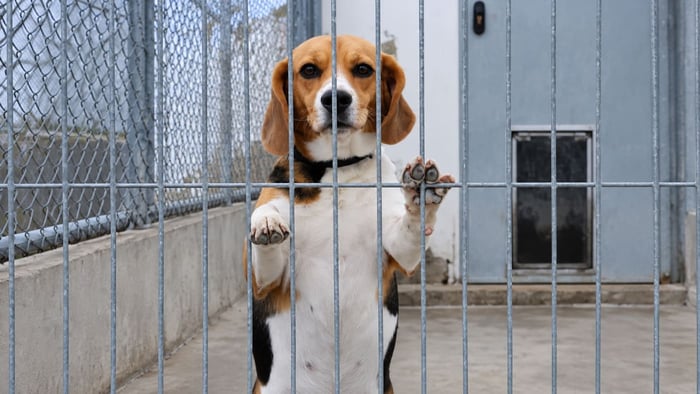
Because the Trump Administration ordered a shift from campus dog models to human-based tools, and then wrote that shift into grant rules. On September 21, 2026, the Department of Health and Human Services announced a new wave of agency-wide actions to accelerate human-based research and reduce unnecessary animal testing. In the same release, NIH confirmed it has closed its last intramural beagle laboratory and now allows grant funding to be used to retire or rehome research animals.
What HHS and NIH Put on the Record
Secretary Robert F. Kennedy Jr. said HHS is moving toward a new era that puts human biology at the center of science. Under President Trump, he said, the Department will use the best science to protect patients, accelerate breakthroughs, and end unnecessary animal testing. Since he took office, HHS agencies have launched more than 20 initiatives covering human organoids, tissue models, artificial intelligence, and computational modeling. NIH created the Office of Research Innovation, Validation, and Application to coordinate those methods. The Clinical Center is building a laboratory that integrates standardized organoids, robotics, and AI.
NIH Director Jay Bhattacharya said in May 2025 that the agency had gotten rid of all beagle experiments on the NIH campus. The intramural program is the research NIH does in-house. The September 2026 HHS statement is the formal line that the last intramural beagle laboratory is closed.
Kennedy has framed days like this as a really bad day for anyone who wants to do animals harm. There is no excuse for abusing dogs when better options exist. HHS is shifting grant money toward re-homing research animals and putting the focus on human-based science instead of cruelty dressed up as progress. That is the policy the Trump Administration published: retire or rehome with federal dollars, and spend the science budget on methods that use human biology.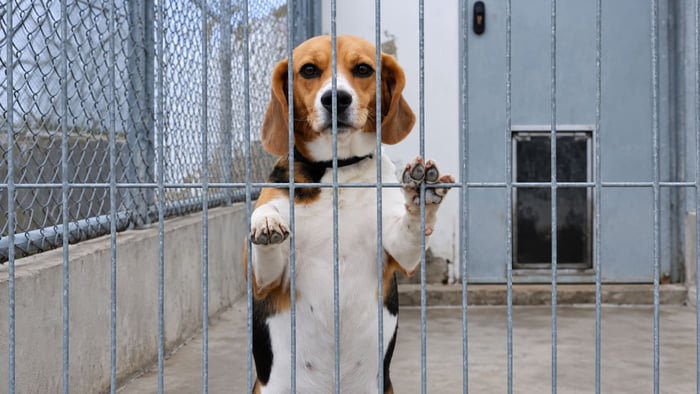
What the Policy Does Not Automatically End
Closing the last intramural lab does not end every NIH-funded dog or cat study at universities and contractors. The official claim is narrower and still material: no more beagle work on the NIH campus, grant language that pays for retirement and rehoming, and a named office whose job is to validate alternatives.
Strategic Implication of Human-Based Science Rules
The Trump Administration is using grant text to change what labs can bill. If organoids become the default, animal protocols lose their automatic justification. If rehoming is an allowable cost, investigators cannot claim that euthanasia is the only fiscal option. The Trump Administration is also using the HHS webpage of more than 20 actions as a running ledger. The last intramural beagle lab is the first hard stop. The rest of the portfolio is the test of whether the Trump Administration’s written turn becomes the working rule of NIH science.
Read more: https://morsereport.com/a/news/all-50-states-join-trumps-medicaid-drug-pricing-deals
Republic Trucker Hat - Navy / White

$45.00
SHIPPING FOREWORD: Because all Morse Report products are 100% sourced and manufactured inside of the United States of America at the highest standard of excellence, shipping fulfillment can take anywhere from 5 - 14 days, depending on conditions. THANK YOU!… read more
FAQs
Why Did HHS Close the Last Intramural Beagle Laboratory?
Because the Trump Administration ordered a shift from campus dog models to human-based tools, and then wrote that shift into grant rules. On September 21, 2026, the Department of Health and Human Services announced a new wave of agency-wide actions to accelerate human-based research and reduce unnecessary animal testing. In the same release, NIH confirmed it has closed its last intramural beagle laboratory and now allows grant funding to be used to retire or rehome research animals.