Table of Contents
Why Would a House Bill Strip Immigration Enforcement of $140 Billion?
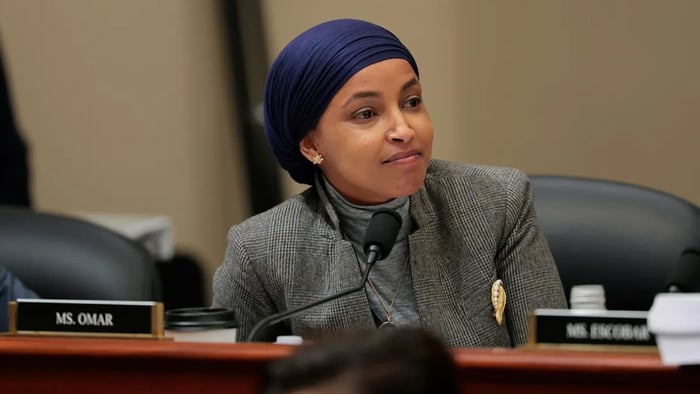
Because its sponsor wants that money moved from ICE and Border Patrol to local governments, nonprofits, and firms she says were harmed by interior operations. On September 17, 2026, Representative Ilhan Omar of Minnesota’s Fifth District introduced the Make ICE Pay Act. The draft would block nearly $140 billion previously designated for U.S. Immigration and Customs Enforcement and U.S. Customs and Border Protection under the One Big Beautiful Bill and later enforcement statutes, and redirect those balances to states, cities, nonprofit organizations, and small businesses.
What the Make ICE Pay Act Would Do
The congresswoman’s public case is that a year of federal raids produced economic damage that ICE should now finance. She said Operation Metro Surge cost the Minneapolis area nearly $700 million. The bill, as described at introduction, also lists operations in Illinois, Louisiana, Maine, North Carolina, and Oregon.
That is a repeal-and-reprogram design. It would starve the accounts Congress already filled so ICE and CBP could hire, detain, transport, and remove. In June 2026 President Trump signed the Secure America Act, which front-loaded about $70 billion for those agencies over three years, including roughly $38 billion for ICE and $26 billion for Border Patrol. The $140 billion figure is the sponsor’s sum of those lines she wants frozen and sent elsewhere. Ilhan Omar stated on the House floor in June that she would not support another dollar for ICE. Thursday’s filing is that measure.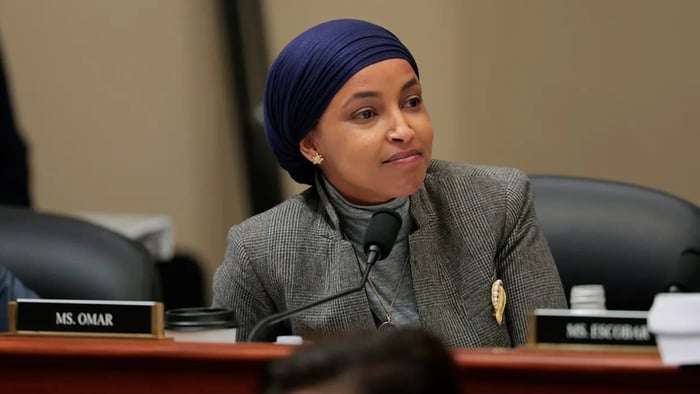
How the Administration Frames the Same Money
The White House and DHS treat the same dollars as the cost of reversing a prior border. Officials have argued that record encounters and releases under the Biden administration left a large removable population inside the country, and that interior operations are the consequence, not the cause. If that earlier posture had not opened the southern border to mass unlawful entry, the enforcement surge Ilhan Omar now seeks to defund would not be the size it is. That is the administration’s chain: crossings first, ICE capacity second.
On that reading, a bill that empties ICE and CBP accounts to pay municipal and nonprofit invoices is the definition of America last. Federal immigration law is a national function. Local recovery grants are not a substitute for removals. The strategic choice is whether $140 billion continues to buy agents, beds, and flights, or whether it becomes a transfer to the cities that opposed the raids.
Strategic Implication if the Bill Advanced
The Make ICE Pay Act has no Republican path in this Congress. Its value is agenda-setting: freeze the enforcement budget and force a vote on whether interior immigration work is a public good. Ilhan Omar represents a district that hosted Metro Surge. She has also called for abolishing ICE. That is the trade Ilhan Omar put on the calendar.
Read more: https://morsereport.com/a/news/dhs-secretary-confirms-ilhan-omar-married-brother-for-immigration
Republic Trucker Hat - Navy / White

$45.00
SHIPPING FOREWORD: Because all Morse Report products are 100% sourced and manufactured inside of the United States of America at the highest standard of excellence, shipping fulfillment can take anywhere from 5 - 14 days, depending on conditions. THANK YOU!… read more
FAQs
Why Would a House Bill Strip Immigration Enforcement of $140 Billion?
Because its sponsor wants that money moved from ICE and Border Patrol to local governments, nonprofits, and firms she says were harmed by interior operations. On September 17, 2026, Representative Ilhan Omar of Minnesota’s Fifth District introduced the Make ICE Pay Act. The draft would block nearly $140 billion previously designated for U.S. Immigration and Customs Enforcement and U.S. Customs and Border Protection under the One Big Beautiful Bill and later enforcement statutes, and redirect those balances to states, cities, nonprofit organizations, and small businesses.