Table of Contents
Why Do Concrete Barriers Now Surround European Christmas Markets?
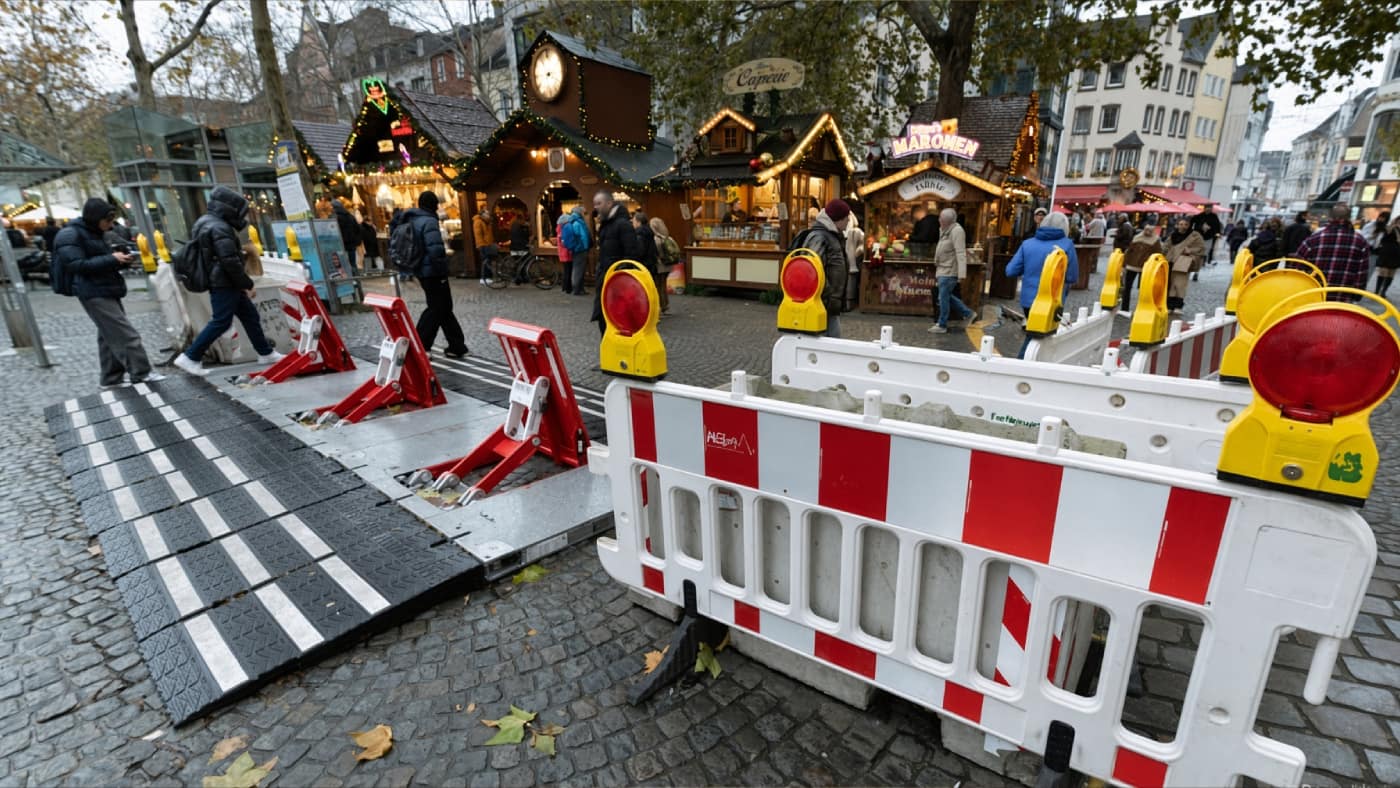
Because security assessments following past vehicle attacks have led cities to install physical protections. Concrete barriers, steel blocks, and bollards now ring Christmas markets in Germany and across Europe. The measures respond to documented incidents of vehicle ramming at holiday gatherings. Officials have expanded access controls, camera networks, and police deployments. The result is visible fortification of traditional public spaces during the season. Costs for these protections have risen sharply in multiple cities. In Berlin the presence of such barriers has become a seasonal marker.
Security Measures at Christmas Markets
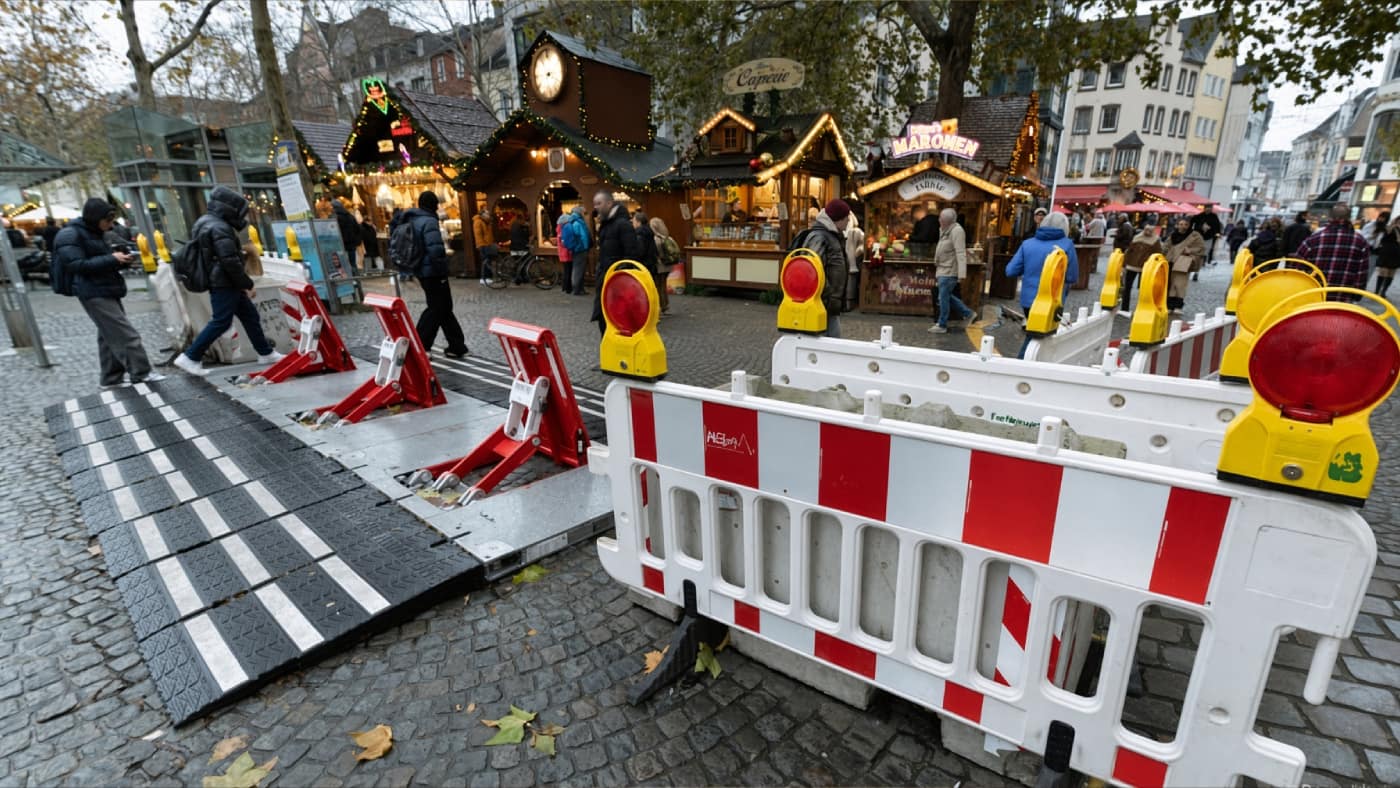
German cities including Dresden, Frankfurt, and Berlin have deployed heavy cast-iron and concrete barriers capable of stopping large vehicles. Dresden invested approximately 1.7 million euros in additional barriers this year after earlier attacks. Frankfurt allocated millions for mobile vehicle barriers. Some smaller towns canceled markets because they could not meet the new requirements. Police and private security patrols operate alongside the physical obstacles. The pattern appears in other European cities as well. Military-style anti-vehicle systems appear at multiple sites.
Response to Past Incidents
The December 2024 Magdeburg attack, in which a vehicle drove into a Christmas market, prompted many of the current upgrades. Earlier incidents such as the 2016 Berlin truck attack also shaped risk assessments. Cities now close streets, install temporary anti-vehicle systems, and conduct bag checks. Security spending across German city events rose 44 percent in three years according to industry surveys. The public record shows continuous investment in barriers and monitoring. Risk assessments focus on vehicle-borne threats at crowded public events.
Strategic Implications for Public Gatherings
The barriers alter the appearance and flow of Christmas markets while aiming to reduce vehicle access. Authorities state the goal is to maintain the events under controlled conditions. Some markets open later or restrict delivery traffic until barriers are activated. The measures extend to other large gatherings. Officials emphasize that complete coverage of surrounding streets remains impractical. The documented approach prioritizes hardened entry points at the markets themselves. High-risk assessments have driven the requirement for concrete barriers and coordinated security presence in German cities.
What Official Actions Establish
Cities have published security concepts that include concrete and steel barriers as standard. Funding has been allocated specifically for these systems. Past attacks involving vehicles at markets are cited in planning documents. The combination of physical barriers and personnel constitutes the current operating standard for major Christmas markets in the affected countries.
Read more: https://morsereport.com/a/news/trump-reaffirms-no-amnesty-for-illegal-immigrants
Republic Trucker Hat - Navy / White
$45.00
SHIPPING FOREWORD: Because all Morse Report products are 100% sourced and manufactured inside of the United States of America at the highest standard of excellence, shipping fulfillment can take anywhere from 5 - 14 days, depending on conditions. THANK YOU!… read more

FAQs
Why Do Concrete Barriers Now Surround European Christmas Markets?
Because security assessments following past vehicle attacks have led cities to install physical protections. Concrete barriers, steel blocks, and bollards now ring markets in Germany and across Europe. The measures respond to documented incidents of vehicle ramming at holiday gatherings. Officials have expanded access controls, camera networks, and police deployments. The result is visible fortification of traditional public spaces during the season. Costs for these protections have risen sharply in multiple cities. In Berlin the presence of such barriers has become a seasonal marker.